About Temple
The revered Shirali Maha Ganapathi Mahamaya Temple is an ancient Gowda Saraswat Brahmin (GSB) Samaj Temple, located in quiet and serene town of Shirali in the southern part of Bhatkal Taluq, Uttar Kannada District of Karnataka State.
400+
20,000+
Kulavi Members
Built Years Ago
125+
Kulavis
Shri Pete Vinayaka Shantadurga / Shri Mahaganapathi Mahamaya Temple, Shirali, Uttara Kannada District, Karnataka - 581354
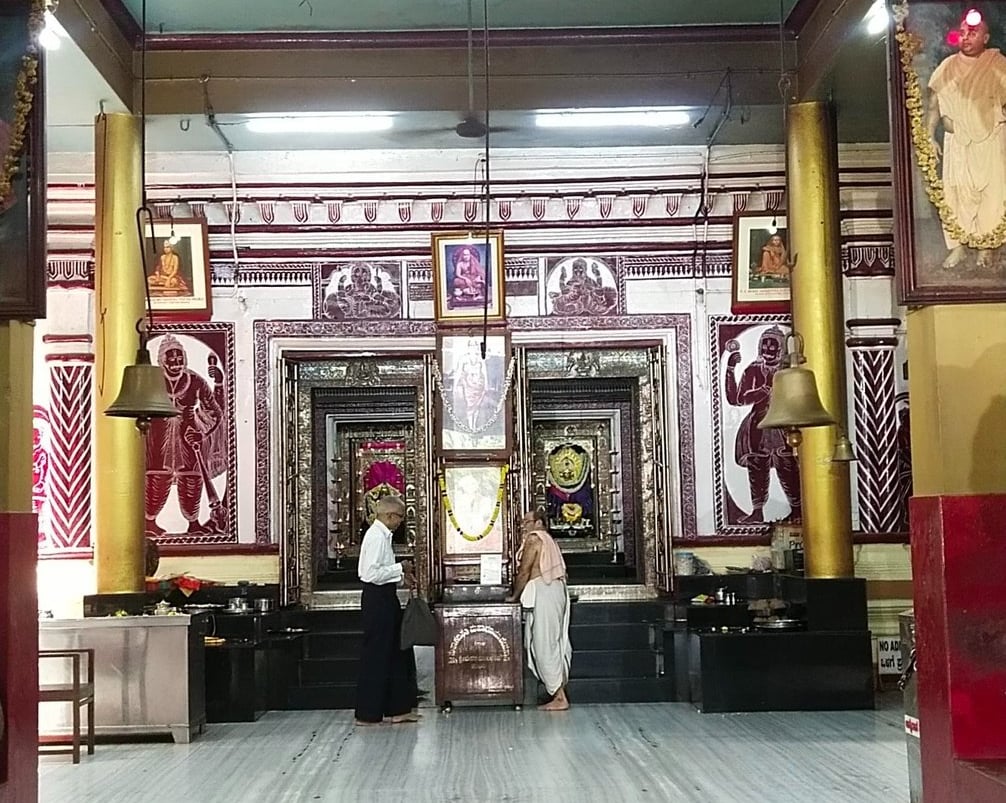
The temple is dedicated to the Lord Ganesha as Maha Ganapathi and the Goddess Mahamaya (Shantadurga). The Ubhaya deities are unique combination providing solace and succour to their devotees and also have a high reverence within the community and the people of Shirali town.
The temple is dedicated to the Lord Ganesha as Maha Ganapathi and the Goddess Mahamaya (Shantadurga). The Ubhaya deities are unique combination providing solace and succour to their devotees and also have a high reverence within the community and the people of Shirali town.
According to historical records, the Gowda Saraswath Bhramin (GSB) families of Prabhu, Shenoy, Kamthi, Kini, Kudva, and Pais, who earlier resided in Goa, migrated to the southern parts of India, to avoid the forceful conversion by the Portuguese in 1540 AD.
This included ancestors who were serving the Shri Vinayaka and Shri Shanthadurga temples in Naveli and Golthi. They moved to Bhatkal four hundred years ago with the Saanidhya of sacred Mukha Varnika of Mahamaya and the deity Maha Ganapthi in a silver trunk, with other sacred articles from the temples and installed the deities at Shirali.
The Moorthi of Mahaganapathi (Ganesha, Vinayaka) and Mahamaya (also referred as Durgadevi and Shantadurga) were located in Ella, Tiswadi, Goa along with Gomanteshwar and its affiliates. During the Muslim invasion in Goa (13th century), the temple in Ella was destroyed and the Moorthis were transferred to Goltim-Navelim (Golthi-Naveli) on Divar Island of Goa.
Gomanteshwar and his affiliated deities still remain in Ella in Brahmapur. On account of the hostile religious policies pursued by the Portuguese rulers around 1560, the devotees left Goltim-Navelim after the destruction of the temples there. Unable to take the Moorthi’s with them, they invoked the ‘saanidhya’ or the presence of the deities in the silver trunk of the Maha Ganapthi and the Mukha Varnika of Mahamaya and carried them with at most care and devotion.
When they reached Bhatkal in Karnataka, they kept the respective sacred symbols of Maha Ganapathi and Mahamaya with Saanidhya in a shop (Angadi) belonging to a devotee in Shirali Pete. Later on, they constructed a temple in Shirali in the lands offered by two families of Shenoy and Mallya, a few kilometres north of Bhatkal, where it stands majestically, to this day. The deities are also addressed as Pete Vinayaka and Shantadurga, as they were earlier located in a "pete", which means a town in Kannada. The temple has a unique darshan seva called, "mali" for seeking the guidance and permission from Deities by Devotees.
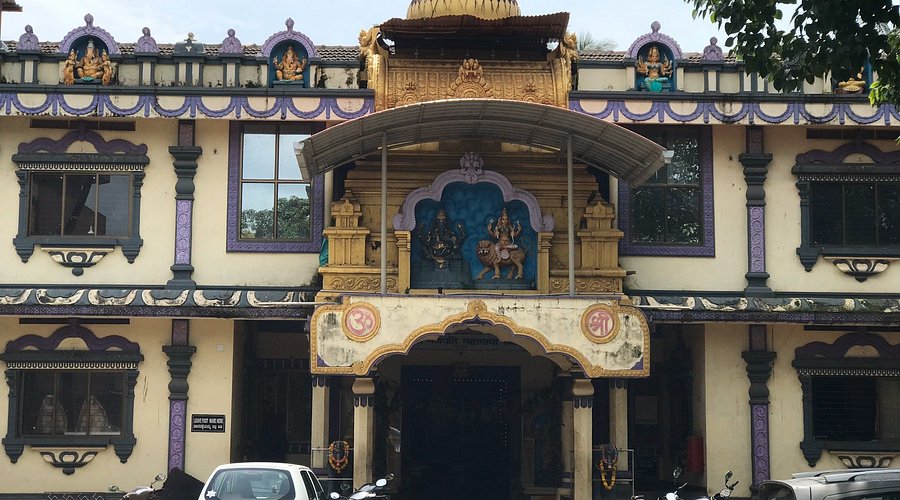
The revered temple is the Kula devata Temple (family temple) of the Goud Saraswat Brahmin community. The temple god is a Kula devata (family deity) of the Kamaths, Bhats, Puraniks, Prabhus, Joishys, Mallyas, Kudvas and Nayak families from the Goud Saraswat Brahmin community. The Temple was built about 400 years ago. Later, it was renovated in the year 1904 in the Gomaanthak Temple architecture style with a majestic pyramid tower over the Garbagruha.
The Pratishta of Mahamaya Utsava Murti was carried out by His Holiness Shrimat Bhuvanendra Tirth Swamiji of Shri Kashi Math Samsthan in 1884 which activated and enabled lots of future events and tremendous development and all round religious activities in and around the temple.
In 1904, the new Garbhagruha was constructed and the two deities were re-installed in the temple. In the year 1971, His Holiness Shrimath Sudhindra Tirth Swamiji of Kashi Mutt Samsthaan, Benaras, presided over the activities of the temple and introduced and set up the pooja vidhis and various seva systems to both the Deities according to the age old Agama principles and initiated the construction works around the temple to facilitate the stay and seva by Priests and Devotees. The current Peetadhipati, His Holiness Shrimath Samyameendra Tirth Swamiji of Kashi Mutt Samsthaan, Benaras, presides over the temple Central Management Committee (CAC) and guides its activities and development which you are witnessing.
In 1971-72, the front block of the temple was constructed and the accommodation for the temple priests were constructed around the temple in 1974. In 1986, yagna mantap construction work was also carried out.
Since then, various efforts have been made to improve the facilities and services at the temple with financial help from devoted members of the Kulavis and Konkani community.
The temple has a large following and is also the 'family temple' (Kulavi Devasthaan) of several Konkani families who come to pay their respects and obeisance after every auspicious occasion in the family such as a wedding, birth of a child etc. or even in times of distress to make vows to the deity and seek blessings and directions.
The name Shirali is derived from Sanskrit word Shrivalli, which means wealthy. The shrine of Goddess Shrivalli Bhuvaneshwari inside the premises of Chitrapur Math which has its Moola mutt at Chitrapur in Shirali signifies the origin of the name Shirali.
Shirali is located at 14.0167°N 74.5167°E.[2] It has an average elevation of 12 meters (42 ft). Nearest towns - on the South is Bhatkal and Baindur. On the North is one more temple town, Murudeshwar .
The temple has a beautiful temple tank in front court yard with crystal clear water in it on all 365 days of the year and is soothing to eyes.
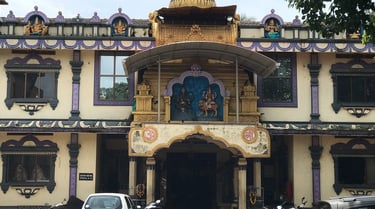
Temple Timings
The Temple opens sharp at 6.00 AM with a ferocious Nagari (drum beats) and soothing Vaadya and followed by Nirmaalya Visarajana pooja, aarati and Naivedya to Dieties are offered before 7.30 am. The Temple would then get ready to start various poojas, abhishekas, homa, and yajnas by 8.00 Am, which would go on till 12.30 pm and post that the Madhyanha Maha Pooja, naivedya and aarati are performed to Ubhaya Deities by 1.00 pm.
Post that, the devotees get the prasad for their respective pooja offerings in front yard of the Deities and all the devotees are offered food at the second floor Annapoorna Prasad Hall. After the noon break, again the evening Bhajan and other rituals start at 6.00 pm and the Raatri Maha Pooja, naivedya and aarati are performed by 8.00 pm. By 8.30 Pm, Panivara and prasad are distributed to devotees and food for all devotees get served at the Annapoorna Prasad Hall.
At 8.00 am in the morning and upto 10.00 am, breakfast is also provided by the temple at the Annapoorna Prasad Hall.
Maha Ganapathi Mahammaya Temple
The Maha Ganapathi Mahammaya Temple in Shirali, Karnataka, is a revered spiritual center for the Goud Saraswat Brahmin community.
Kulavi Whatsapp Notification Subscription Form
(Avoid Multiple Registrations)
© 2025. All rights reserved. www.mgmshirali.com
Powered By Esha Labs